Overview
The trainshed at Holyhead station is a Grade II listed structure that was opened in 1866 at the end of the North Wales Main Line. JNP Group was tasked with carrying out an initial inspection of the roof structure, supporting columns, and arcade walls. The report highlighted surface corrosion to the ironwork and deterioration of the masonry due to the effects of weathering.
As part of JNP’s design submission to Network Rail, a comprehensive scheme of structural repairs was proposed for the roof structure. These included the installation of supplementary longitudinal ties, the replacement of angle bracing members, and the incorporation of additional truss elements to increase section capacity. Furthermore, selective remedial works to the arcade wall were detailed, including crack stitching measures and a full refurbishment of the above ground drainage system. To facilitate ongoing maintenance and ensure the highest standards of safety, the design also incorporated new access ladders and a ‘mansafe’ system to provide safe access for future maintenance.
Project Solutions
As Holyhead station has Grade II listed status, the proposed repairs were designed to be like for like. However, due to the structure’s age, some of the metalwork section sizes were unavailable. The design team selected the closest available section size, taking into consideration the connections between new and existing sections.
Due to the coastal location of the station, the building is exposed to the effects of weathering, which has led to the deterioration of the structure. To help combat this, it was proposed to incorporate an additional ‘smart’ corrosion inhibitor into the Network Rail M34 protective paint primer coat. The aim was to enhance the longevity of the protective coating.
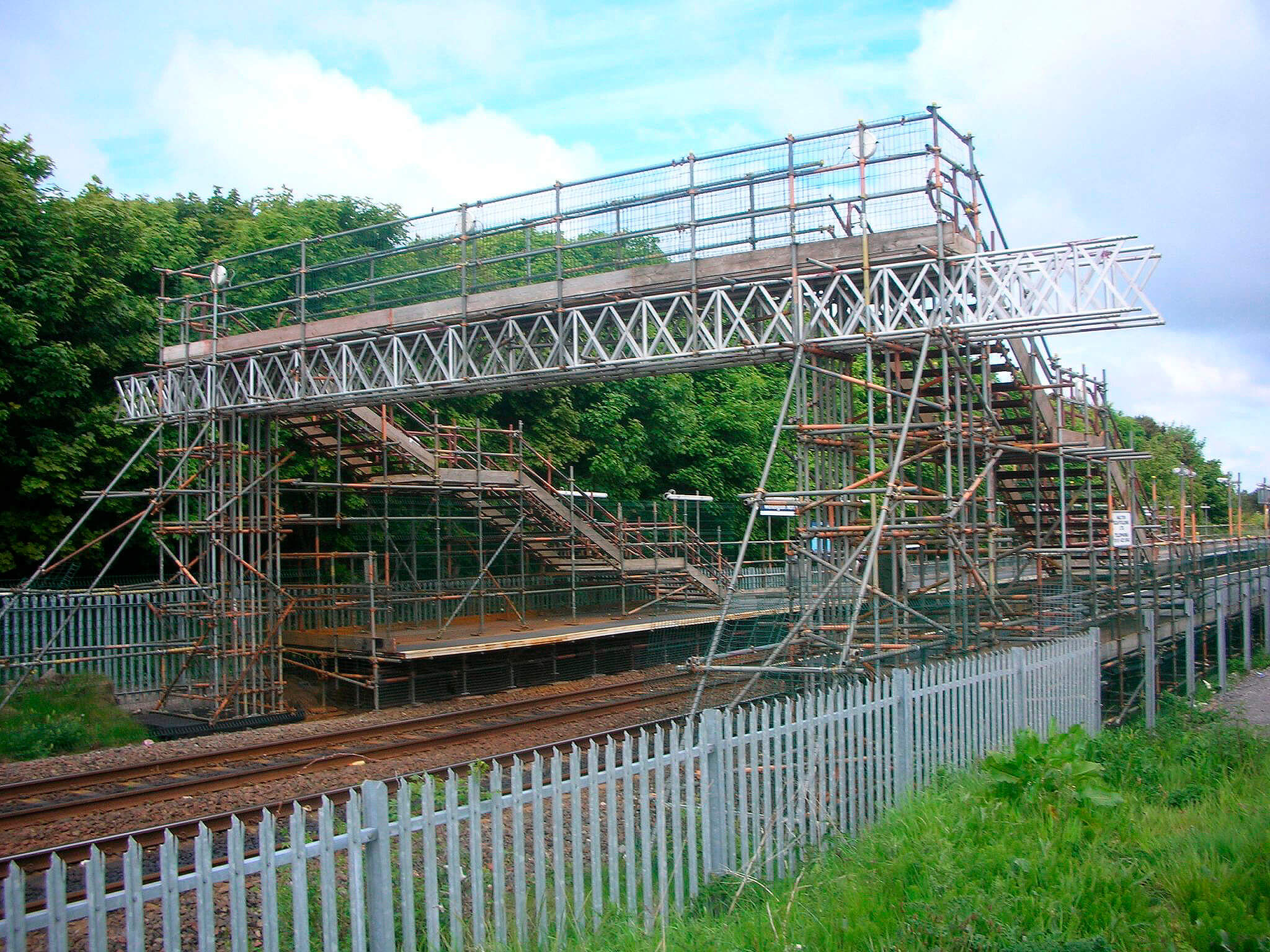
Over the duration of the works, the train shed needed to be accessible. A multi-level crash deck solution was designed; this enabled the repairs to be carried out safely while the station remained operational.
To enable the removal and replacement of some truss members, temporary works were required. A temporary shoe arrangement was designed in collaboration with the steel fabricator and contractor that would hold the existing one in place to allow the works to be carried out while retaining the building’s structural integrity.
Summary
JNP was initially commissioned to undertake a preliminary inspection, subsequently followed by the preparation of Form 1, 2, and 3 design submissions in accordance with Network Rail requirements. Following additional site inspections, JNP was further engaged to provide Form 1 and 2 temporary works designs for some of the repairs. The repairs were successfully carried out in a way that enabled the station to remain operational. The design team was able to modify designs to allow for differing metalwork sizes and provide solutions to stave off the effect of weathering and improve the building’s resilience, while complying with Network Rail requirements.
Gallery


JNP Group Project Team
Project Manager: Vicky Walker
Project Team: Dan Artis, Shuaib Tailor, Jonathan Hartley
Client: Network Rail
Sector: Rail
Services Provided
- Inspection and reporting of structural condition
- Production of Form 1, 2 & 3 for Network Rail submission incorporating full design drawings and details
- Design of temporary works to facilitate high level repairs
- Production of Temporary works Form 2 & 3 incorporating full design drawings and details
- Provision of schedule of repairs
- Attendance at site meetings
- Attendance at IDC meetings
- Responding to DRN comments and providing AFC information
Challenges
- Grade II listed structure
- Environmental factors of coastal location
- Operational railway
- Temporary works needed to facilitate truss repairs
Solutions
- Adaptations made to accommodate antiquated metalwork sizes
- Incorporate an additional ‘smart’ corrosion inhibitor into the proposed M34 primer coat
- Installation of multi-level crash deck
- A temporary shoe arrangement was devised as a support solution