Overview
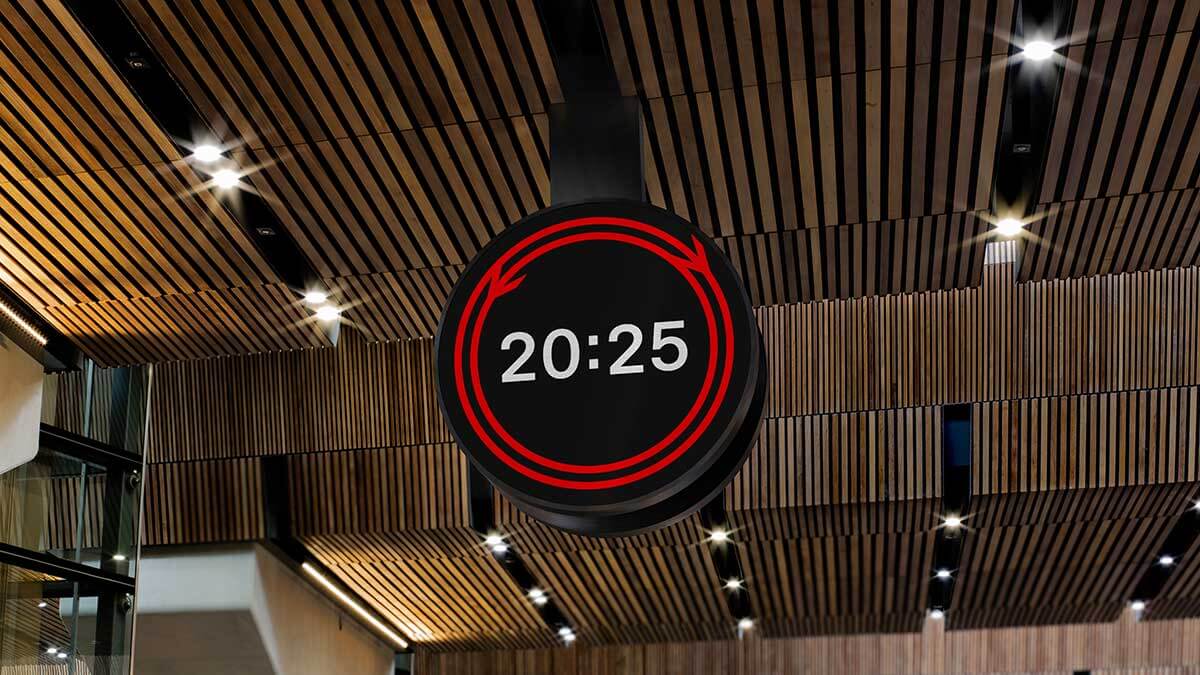
JNP Group was commissioned to undertake structural design for the support of a new centrepiece clock in the main concourse of London Bridge Station. The double-sided clock weighs approximately 500kg and is 1.85m in diameter. Our engineers had a number of variables to take into account, ensuring that the design enabled the clock to be mounted in the client’s preferred location without compromising the existing bridge structure.
Project Solutions
The initial proposal was to drill and install new resin or mechanical anchors to the concrete trackbed. This approach would have needed precision technique during mounting to minimise damage to the existing structure. A closer inspection of the bridge revealed that M24 threaded inserts were already pre-installed into the concrete trackbed. This prompted changes in the design philosophy whereby a new solution utilised the existing fixings points to avoid drilling into the concrete structure. We sought confirmation of the existing threaded fixings’ suitability and load-bearing capacity through site observations, review of record drawings and manufacturer datasheets.
We also addressed the challenge of aligning the desired clock location as specified by the client with the existing fixing locations which were offset. A redesign of the steel framework allowed six fixing points to be utilised to support the clock and its bracketry. Slotted holes were used in strategic locations to allow flexibility during installation.
The engineer factored in the need for the support bracketry to be installed through a narrow lighting channel. To utilise all of the available space, wide double RHS bracketry was spliced to a singular circular hollow section. This circular hollow section allowed the bracketry to pass through the narrow lighting channel and provided rotational flexibility which helped to accommodate the bridge’s 20-degree offset to the rest of the building.
The final part of the installation saw the primary bolted fixings being secured with Loctite threadlocker, and the use of nyloc nuts in other locations to minimise the risk of loosening due to the vibrations from trains running over the top of the bridge structure.
Summary
The success of this project relied upon our engineers’ ability to adapt designs to meet the client’s stipulations while working within the perimeters of the location. The revised design provided a more efficient and less intrusive solution by utilising the existing M24 threaded inserts and avoiding unnecessary drilling. The design successfully addressed the alignment and space constraints while incorporating measures to ensure stability and long-term performance under train-induced vibration. This demonstrates good engineering judgement, adaptability, and consideration of both construction and structural integrity.
Gallery


Discipline: Rail, Structural
Client: Infotec
Services Provided
- Structural Design
- CRE-d Rol
Challenges
- Avoiding compromising existing structure
- Aligning the desired clock location with the existing fixing points
- Limited space within Lighting channel for installation
- Vibrations from trains loosening fixings
Solutions
- Modifying designs to utilise existing fixings
- New steel framework design utilising existing fixing points
- Spliced dropleg bracketry
- Use of Nyloc nut fixings and Loctite thread locker to secure bolted fixings