Overview
Thrybergh Hydropower was the largest low-head hydro scheme in Yorkshire and the largest plant commissioned in England. JNP Group provided structural and civil engineering services on the project.
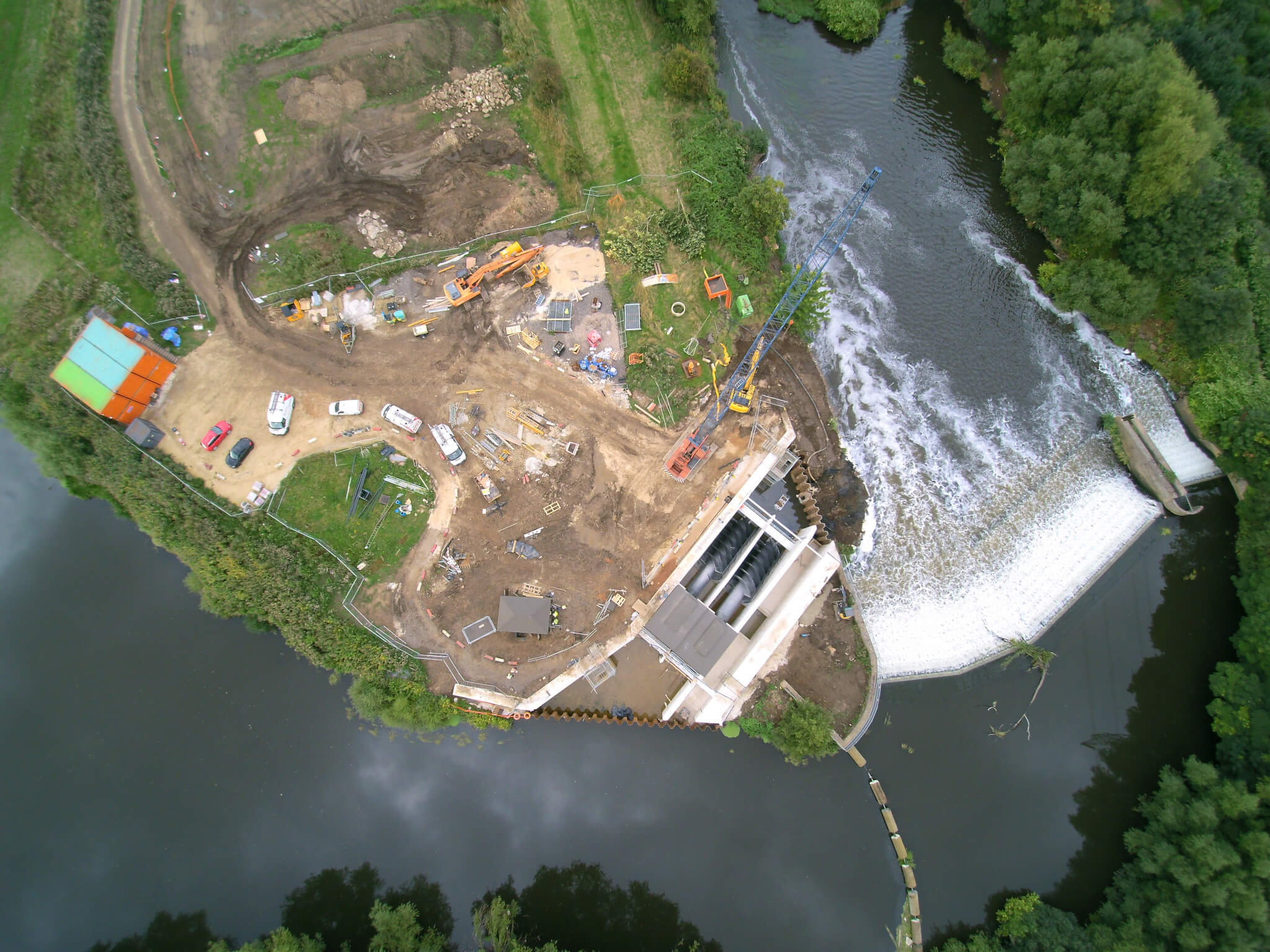
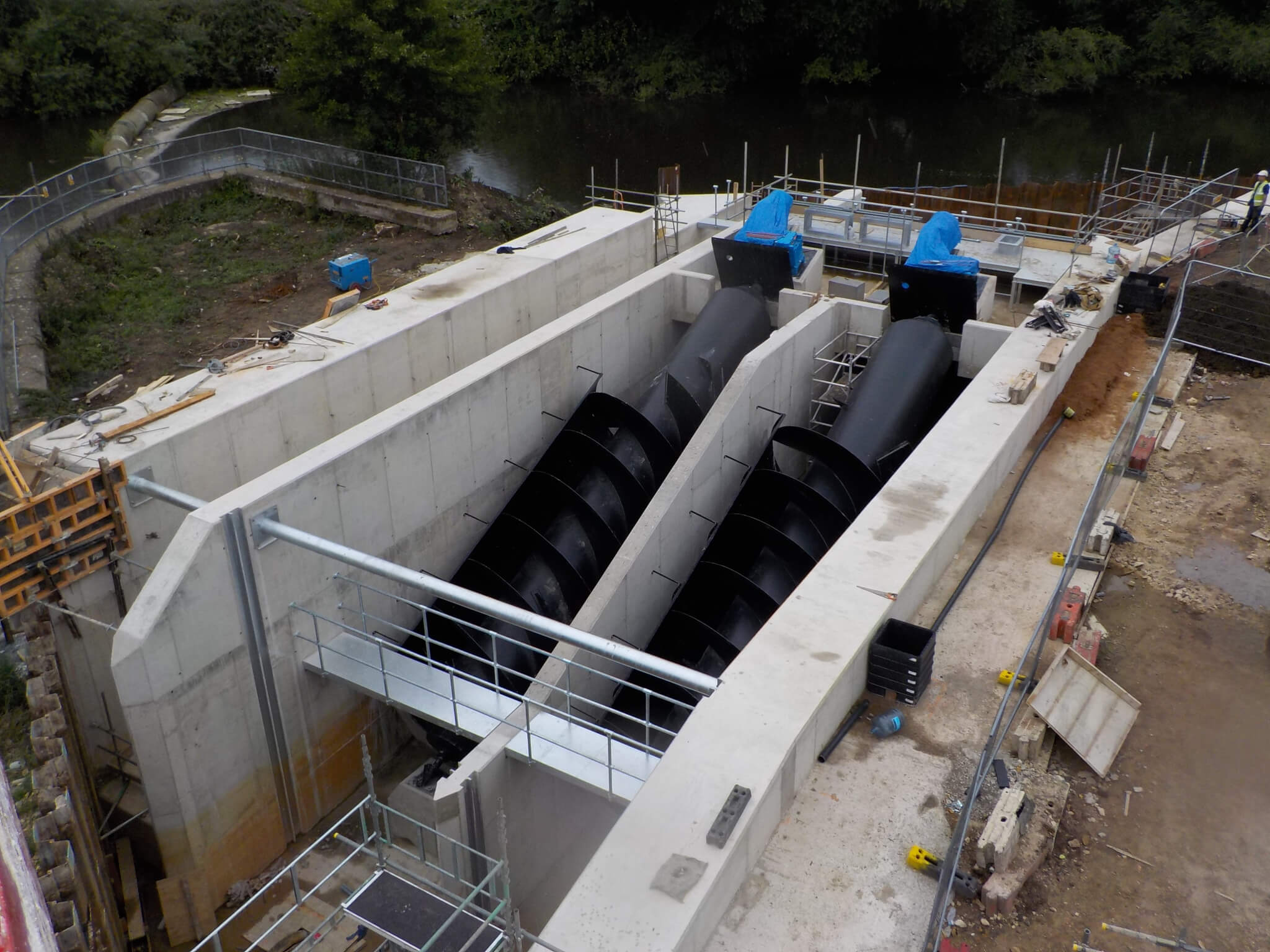
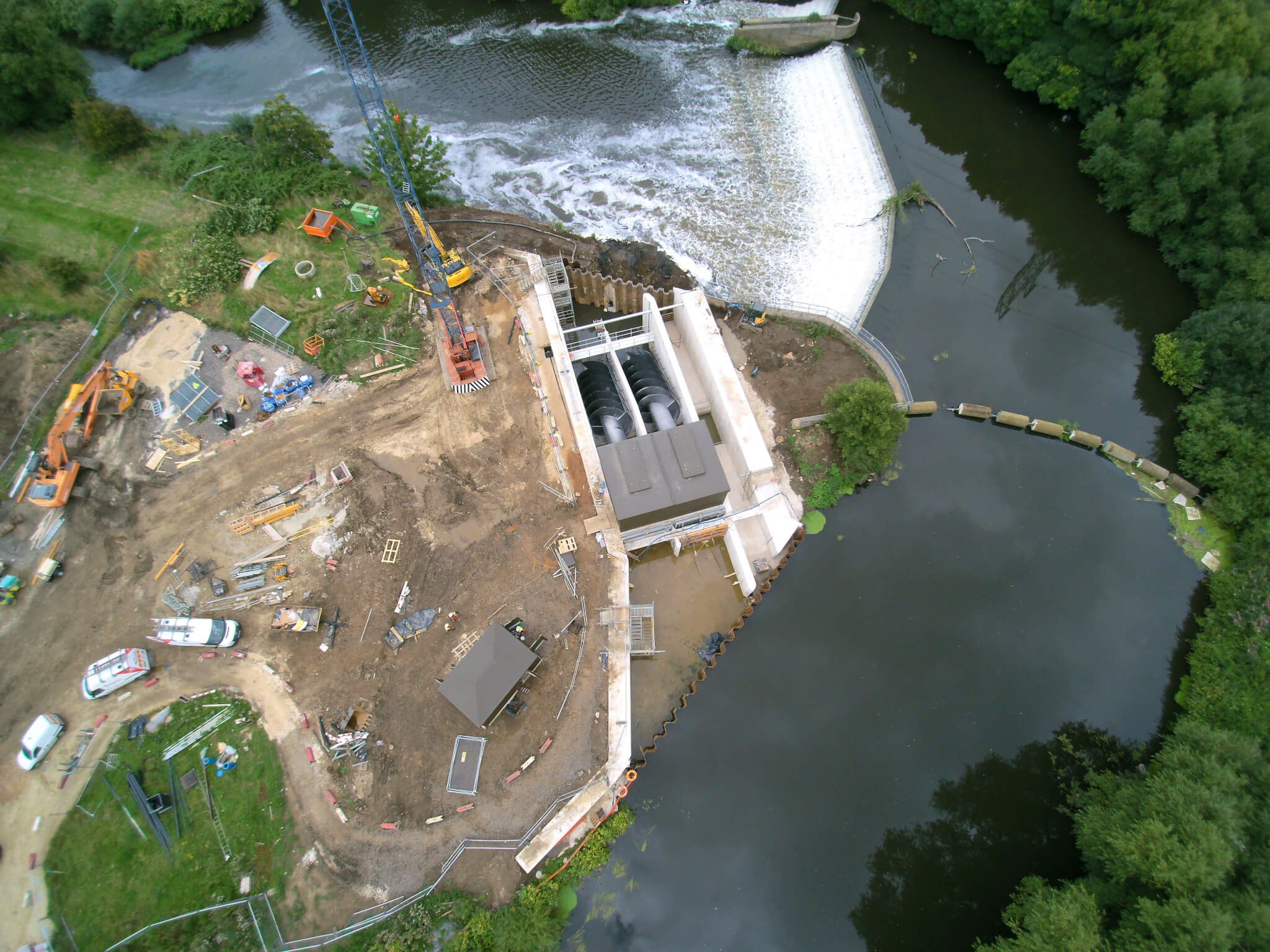
The scheme consists of 2 Archimedes screws, which are estimated to produce 1 million kilowatt-hours per annum for the next 75 years. The screws are 3.8m diameter x 14.6m long and are housed within a reinforced concrete structure.
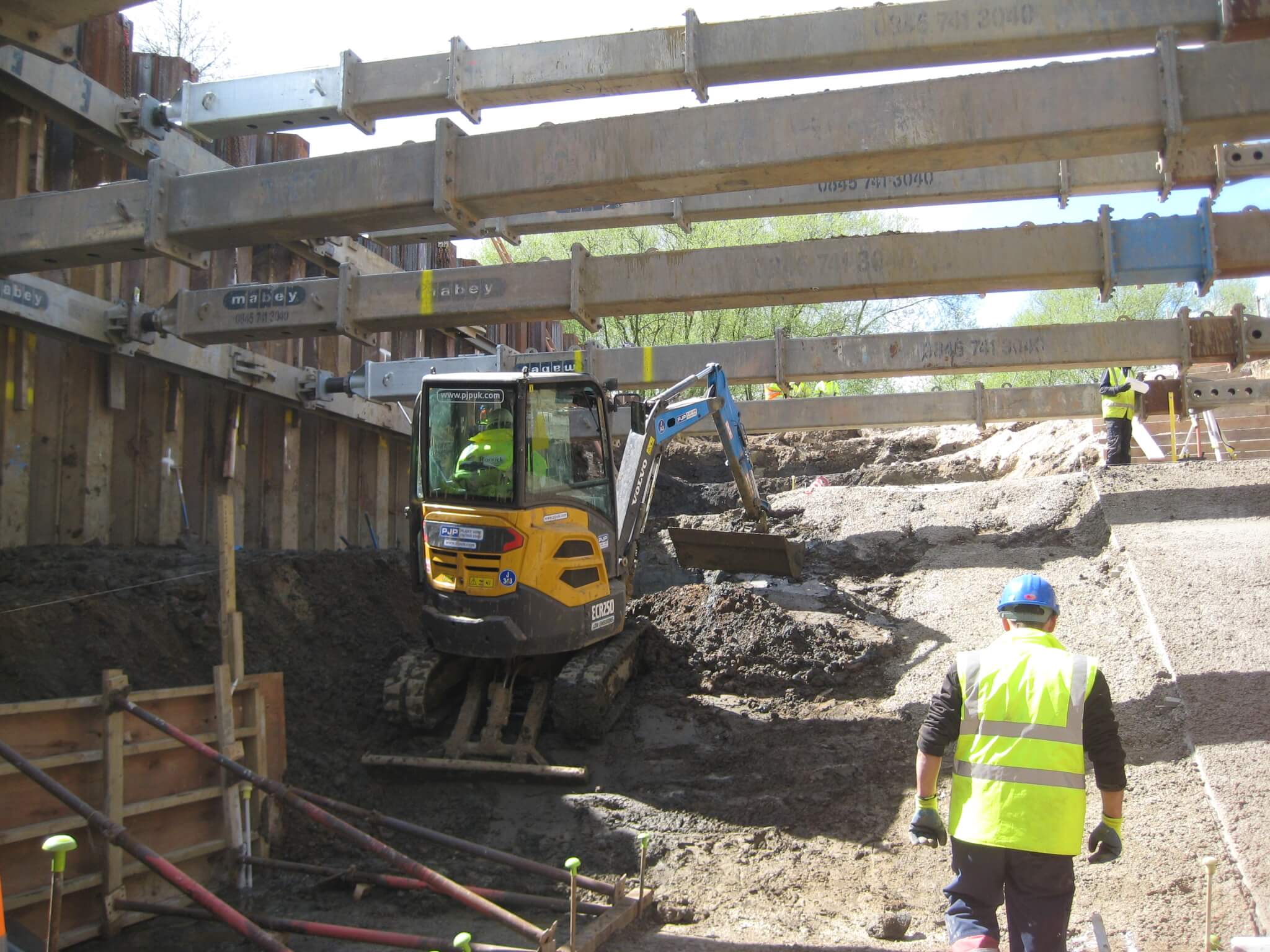
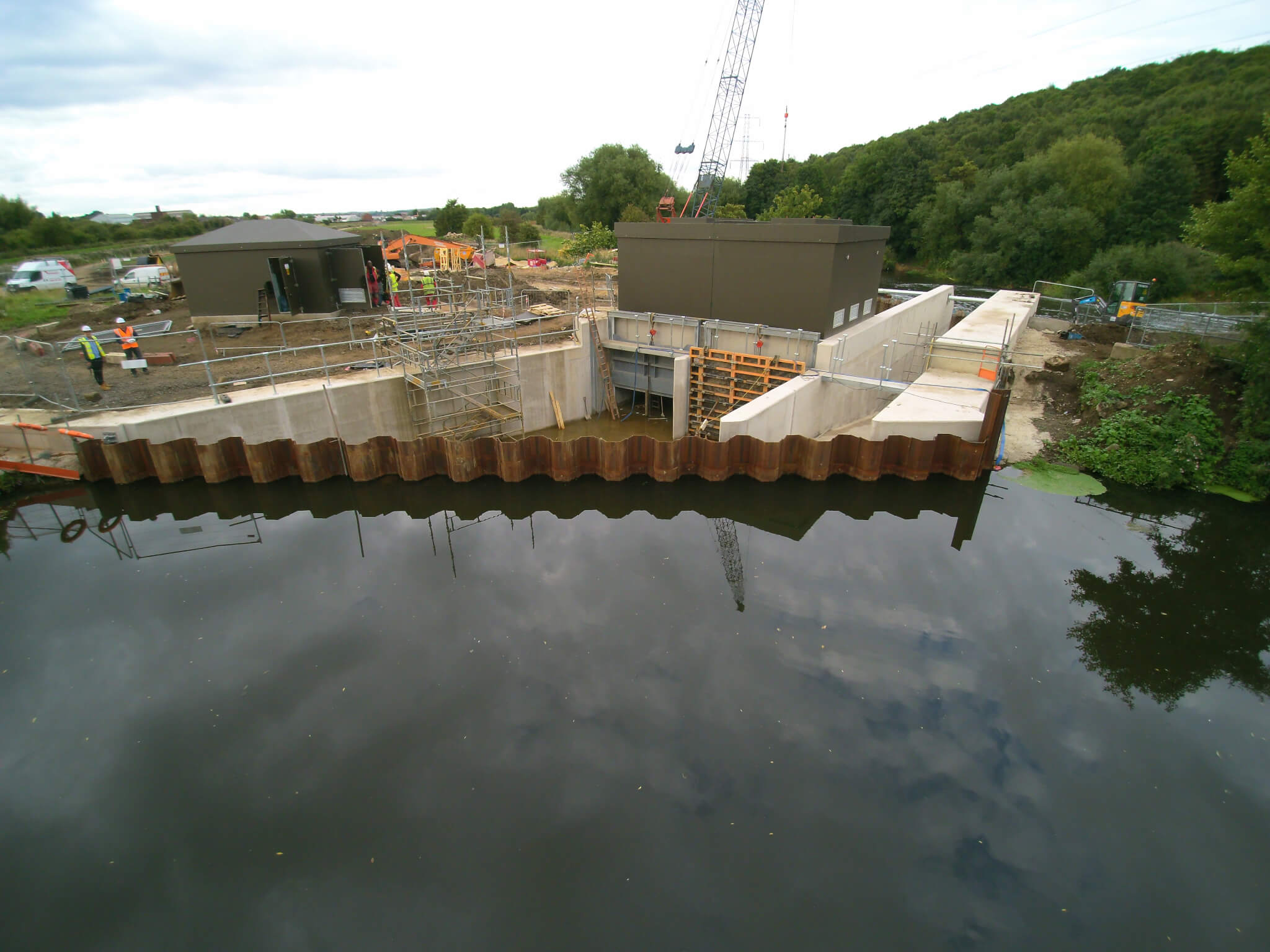
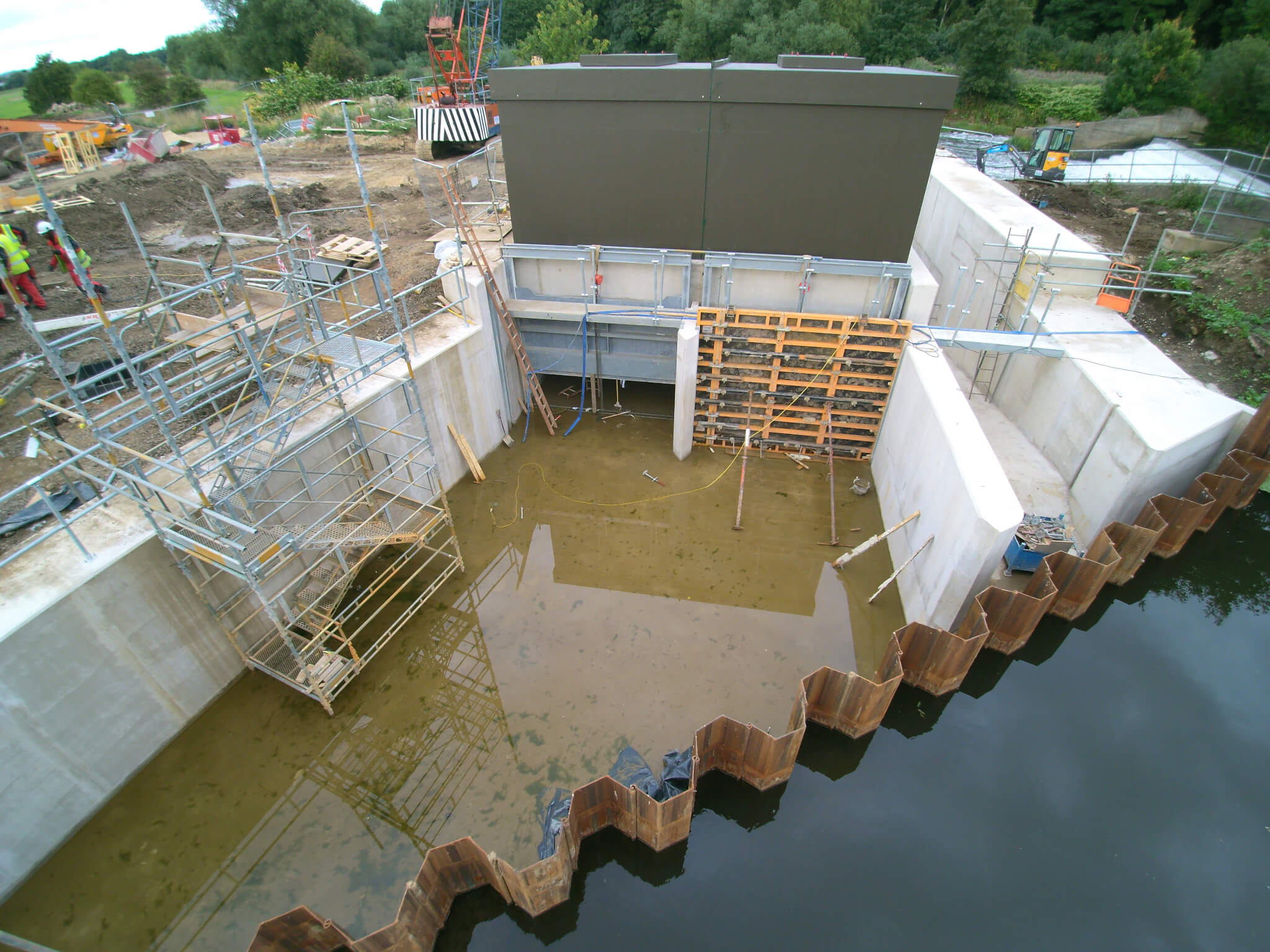
Sheet piles were installed to create a cofferdam alongside the weir, and extensive temporary works propping allowed excavation and construction of the reinforced concrete channel within the cofferdam. Once the construction was complete, the cofferdam was flooded, and the sheet piles were burnt off.
In addition to the Archimedes screws, a fish pass, an eel pass, and 2 kingfisher boxes were installed. The new fish pass replaced the existing non-functioning Alaskan type A fish pass mid weir and since completion of the project has proved successful, as salmon have already been viewed in the upper section of the River Don. The project received a ‘Commended’ Smeaton Award at the annual ICE Yorkshire & Humber Civil Engineering Awards 2016, in the category ‘Projects greater than 500k less than £5m’.
Project Solutions
JNP Group provided several design solutions for this project. The 6.5m high concrete wall as designed a propped cantilever using the capping beam as top support. To reinforce the capping beam, circular hollow section props were designed between the walls and kept to 250mm to ensure minimal shading of the fish pass. To counteract a soft spot encountered during excavation, the team recommended the provision of 6F5 fill material and a geogrid prior to construction of the intake slab.
To ensure that the structure’s design life span is met, great attention was paid to preventing bimetallic corrosion to the base slab fixings. This was done by the introduction of sacrificial magnesium anodes attached to the baseplates.
To enable the works to be successfully carried out in the river adjacent to an existing weir, a cofferdam was created with sheet piles to cut off the river flow, and the excavation was dewatered during construction with a sump pump. Once the construction was complete, the site was flooded, and a diver was employed to burn off the sheet piles before the plant was commissioned.
This project required collaborative working with the design team and the contractor. Early collaboration with the design team during the tender period lent itself to a close working relationship. Working closely with the contractor enabled the design of the permanent works around the temporary works sequencing whilst minimising impact on the program and helping the contractor find a value-for-money solution.
Summary
This project resulted in the successful construction of a hydropower station whilst being sympathetic to preserving the nature within the river environment. Collaborative working enabled JNP to provide design solutions while working in a river as well as in close proximity to a weir in a timely manner. The use of circular hollow section props, 6F5 fill material and geogrids, sacrificial magnesium anodes, and sheet piles ensured the construction of a highly functional clean energy system.
Gallery
Client Feedback
“It’s great to see this type of long-term investment in energy infrastructure, especially as it is generating clean energy and repairing some of the damage done by centuries of industrialisation. I have been struck by the support for this scheme from the local community and the close working between the Canal & River Trust and the project development team.”
Rt. Hon. John Healey, MP
Wentworth & Dearne Constituency
Project Value: £6m
Client: Yorkshire Hydropower Ltd

Design Services Provided
- Civils design including sheet piles, cofferdam and RC retaining walls
- In situ RC works including concrete channel, suspended slabs, walls, and structural capping beams
- Structural steelwork
- Secondary steelwork (stairs, ladders, walkways)
- Substation foundations
- Principal designer
Challenges
- Reinforced 6.5m high concrete cantilever retaining wall.
- Very long span structural capping beam.
- Potential bi-metallic corrosion between the galvanised walkway steelwork and the stainless-steel fixings.
- Incorporating existing structure into resist forces.
- Working environment – close proximity to weir.
Solutions
- Design solutions incorporating capping beam as support.
- Design and addition of circular hollow section props between walls.
- Installation of sacrificial magnesium anodes attached to the baseplates.
- Increasing beam and rebar size, introduce additional supports.
- Creating a cofferdam with sheet piles to cut off river flow.
- Early collaborative working with design team