Overview
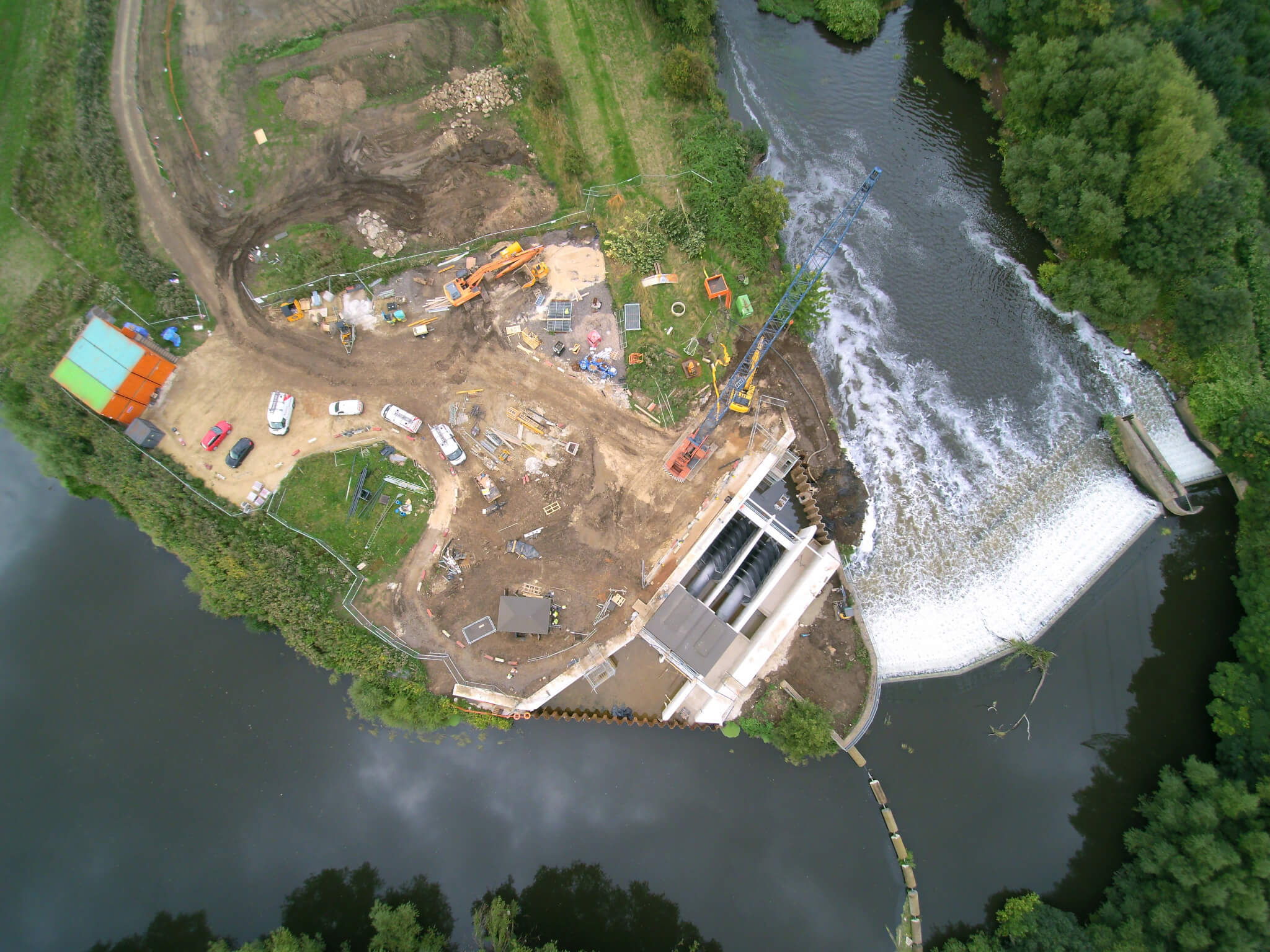
Knottingley Hydropower scheme is the largest hydropower station to be built in England since the turn of the century. JNP was commissioned to provide structural and civil engineering services on the project.
The scheme consists of dual Kaplan turbines, 2m in diameter, which are estimated to produce 3 million kilowatt-hours per annum, equivalent to the consumption of 1000 households. Brotherton Weir, at 2.6 m high, presents one of the largest obstructions to the free passage of salmon and trout from the Humber Estuary to the upper reaches of the river system. A 4.6m wide Larinier fish pass was constructed as part of the scheme, which allows safe passage of migratory fish upstream to spawn. Eel and lamprey are also accommodated with the separate eel pass, which is attached to the existing weir.
Project Solutions
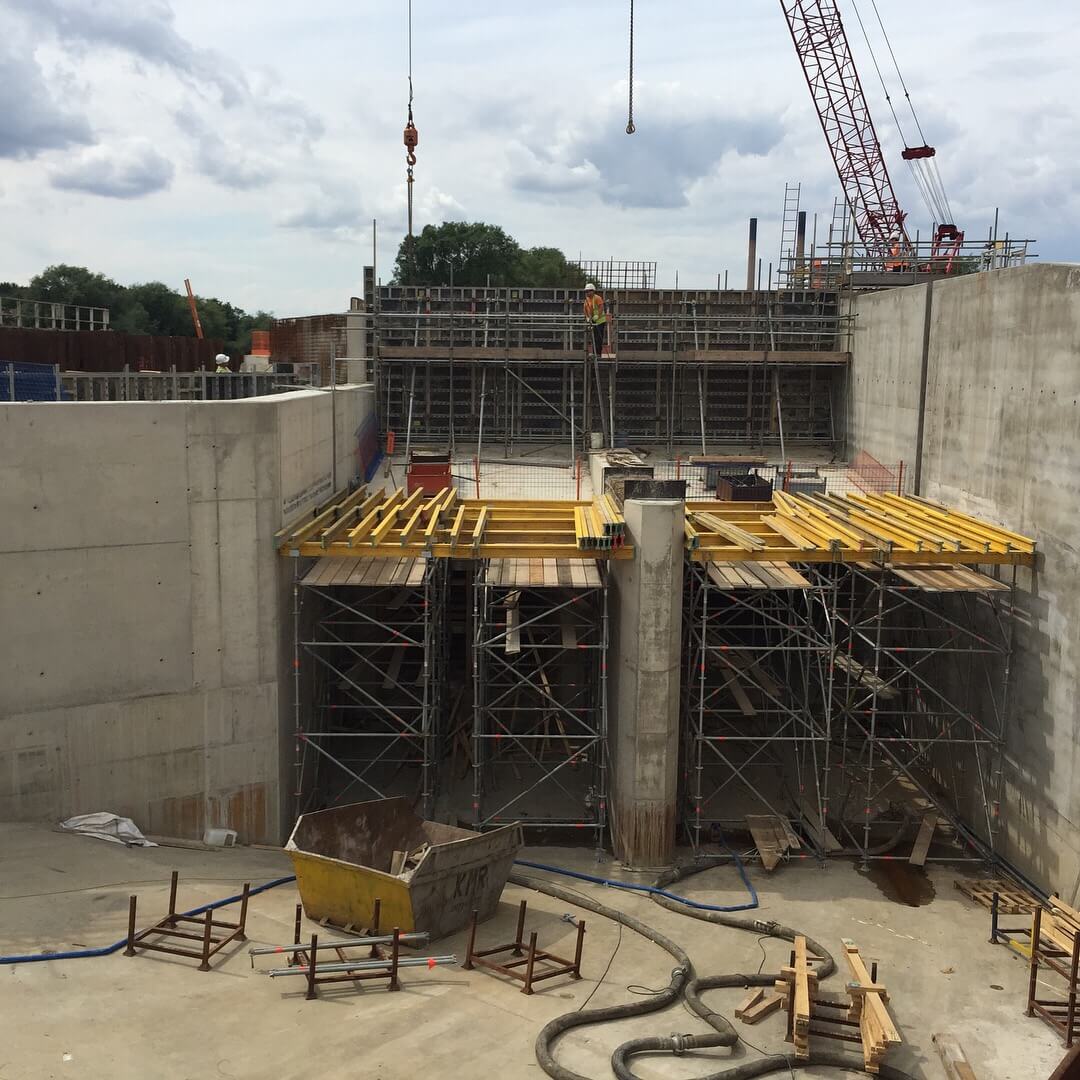
The construction on this scheme took place alongside the existing weir. A cofferdam was created using sheet piles and heavy-duty propping to stem the flow of the river. The area was then dewatered using deep wells. The vast size of the weir and the adjacent double pools required the installation of a 10m high wall in the outlet channel. To enable this, 18m sheet piles were driven into the bedrock and secured with walers and ties for stability.
Following completion of the works and subsequent flooding of the site, a diver was contracted to burn off the sheet piles prior to plant commissioning.
The project location is prone to flooding. During the design phase, particular attention was paid to ensuring that the turbine house was watertight as a means of protecting the equipment housed inside from water ingress. This was achieved through precise detailing of the reinforced concrete structure that included flood doors at the entrance and precast removable panels to enable access for maintenance.
The site location made waste earth removal challenging. This was combatted by carrying out an earthworks strategy that created a net cut/fill balance. The excess earth was repurposed and used for landscaping the areas around the adjacent overflow ponds at the rear of the scheme.
The design team assigned to this project had experience working on two previous hydropower schemes for the same client. Collaborative working methods that were pre-established ensured the success of the project and maintained program timescales to meet the end date for electricity generation.
Summary
JNP Group was instrumental in the design and overseeing construction of the largest hydropower station in England. The invaluable knowledge and good client working relationships gained from previous hydropower schemes was key to the success of the project. The reinforced concrete structure houses a turbine capable of creating 3 million kilowatt-hours of green energy per annum while protecting the local ecosystem, enabling native fish species to migrate upstream to spawning grounds and reusing earth from the excavation to landscape the overflow ponds to lessen the environmental impact of the build.
The collaborative approach between all parties ensured a successful design model and resulted in a Highly Commended Project award by the Civil Engineering Contractors Association (CECA) North West.
Gallery



Disincline: Structural
Project Value: £9m
Client: Northern Hydropower Ltd

Design Services Provided
- Civils design including sheet piles, anchor piles, ties and cofferdam
- RC retaining walls
- In situ RC works including concrete channel, suspended slabs, walls, and structural capping beams)
- Structural steelwork
- Secondary steelwork (stairs, ladders, walkways)
- Substation foundations
- All RC detailing works
- Principal designer role
Challenges
- Working in the river adjacent to the existing weir
- 10m high wall in outlet channel and presence of double ponds
- Building on a flood plane
- Removal of waste from site
- Tight timescales and meeting client dates for power generation.
Solutions
- Construction of a cofferdam to cut off river flow
- Installation of 18m Sheet piles
- Construction includes Reinforced concrete structure, removable maintenance panels & flood doors
- Earthworks strategy created a net cut/fill balance through landscaping
- Collaborative working relationship established in a previous scheme ensured project success